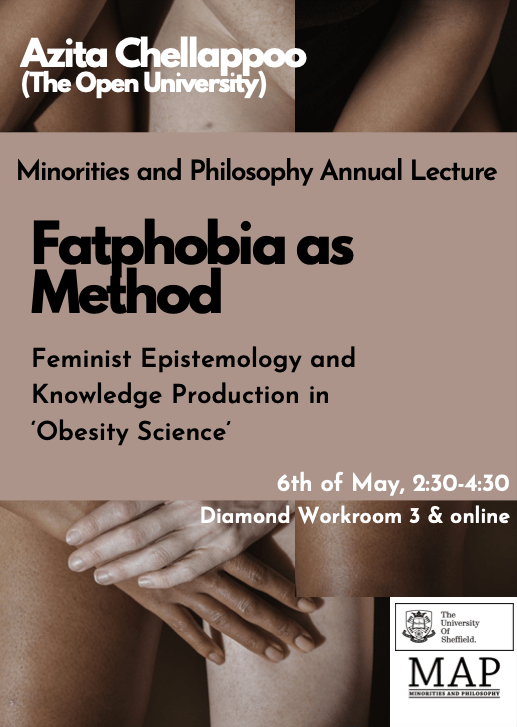
Sheffield's MAP chapter is holding its annual Minorities and Philosophy (MAP) Sheffield Lecture with Dr. Azita Chellappoo (The Open University), who will be talking about Fatphobia as Method. Feminist Epistemology and Knowledge Production in 'Obesity Science' When? - Friday 6th of May 2022, 2:30-4:30 GMT Where? - University of Sheffield, Diamond Work Room 3 and …
Blogpost: Tadhg Kwasi on “Redefining Blackness: Abolish or Reclaim?”
"What does black mean to you? What instantly comes to mind when you think of blackness?" Check out this recent blogpost by Sheffield student Tadhg Kwasi on "Redefining Blackness". In it, Kwasi refers to authors like Fanon and Du Bois and asks questions about what blackness means in the the context of our current society, …
Continue reading "Blogpost: Tadhg Kwasi on “Redefining Blackness: Abolish or Reclaim?”"
God and the Good: Thinking Religion and Ethics – Karen Armstrong on “Sacred Nature”
The lecture series âGod and the Goodâ is back! When? Wednesday 23rd March 2022 Where? Sheffield Cathedral, Church Street, Sheffield S1 1HA Time? Doors open 6.30pm, talks and discussion 7.30pm-9.00pm Here is the abstract: Our discussion of nature has become scientific and abstract. This talk will examine a number of ways in which we can relate to …
Should land be reclassified as a global commons?
By Megan Blomfield In this post, Megan Blomfield discusses their recent article in Journal of Applied Philosophy on treating land as a common good. In a world confronting climate change, new questions arise about how land ought to be used and shared globally. Land has already become scarce relative to the demands of the global economy. Climate impacts and policies …
Continue reading "Should land be reclassified as a global commons?"
How to count organisms, and why it matters – a blog post by William H. Morgan
In this post, our centre member William H. Morgan, who has recently finished his PhD entitled "Individuals in Metaphysics and the Philosophy of Biology", talks about organisms, what they are, how to count them, and why it matters. You can read more on this topic in his recent paper Are Organisms Substances or Processes, published …
Continue reading "How to count organisms, and why it matters – a blog post by William H. Morgan"
Do Empires and States Die Differently?
Our centre member Angie Hobbs recently took part in a panel discussion alongside historians Niall Ferguson and James Hankins, on the question whether empires and states die differently and what their deaths can teach us today. Hosted by Jack Visnjic of Ancient Greece Declassified Podcast, the conversation covers Ancient, Renaissance and the more modern state …
Epistemic Injustice in Asylum Policy and Practice
Alongside Sanjana Govindarajan (University of Groningen) and Kerri Woods (University of Leeds), our centre member Megan Blomflied (University of Sheffield) is organizing a workshop at the annual MANCEPT (Manchester Centre for Political Theory) conference - entitled Epistemic Injustice in Asylum Policy and Practice. With its focus on "forms of epistemic injustice in state asylum policy …
Continue reading "Epistemic Injustice in Asylum Policy and Practice"
Annual meeting of the Northern Phenomenology Network in Sheffield!
Tomorrow, 6th of July, the Northern Phenomenology Network is holding its annual meeting in Sheffield - organized by our centre member Komarine Romdenh-Romluc. From 9:30 to 17:00 we'll hear from Jonathan Mitchell (Manchester) on "The Phenomenal Contribution of Attention",Emily Hughes (York) on "The Manifold Temporalities of Grief"Jacob Kingsbury Downs (Sheffield) on "Auditory Flooding and Sonorous …
Continue reading "Annual meeting of the Northern Phenomenology Network in Sheffield!"
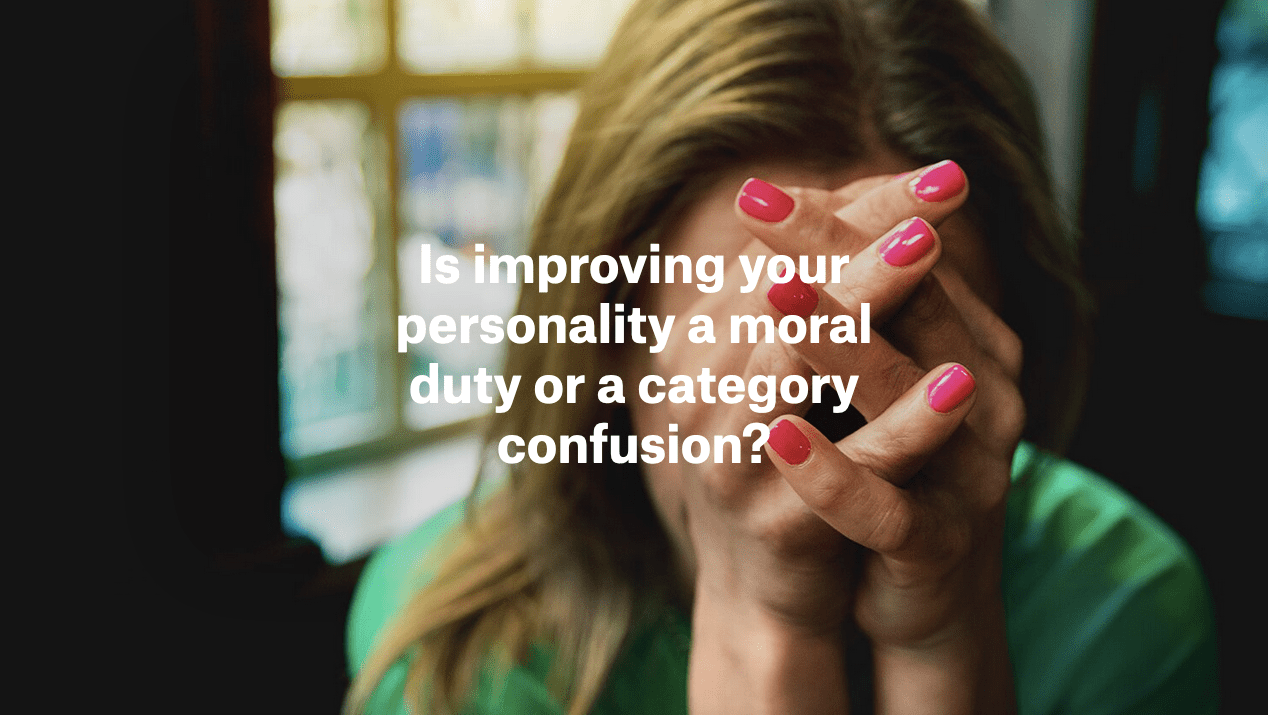
T. Ryan Byerly on whether improving your personality is a moral duty or a category confusion
Our centre member T. Ryan Byerly has recently published a piece in Psyche, asking whether attempts to improve our personalities can be understood as a moral duty or manifests a category confusion. He points out that it is tempting to think that "weâre obliged to improve some areas of our personality, while other aspects of …
Pride month
It's pride month, and a good opportunity to draw attention to the fantastic Trans Philosophy Project. It functions as support for "events (e.g., conference, symposia, and lecture series) and resource initiatives. Events aim to facilitate the development of work in trans philosophy across a broad range of research areas, including metaphysics, epistemology, phenomenology, social/political philosophy, …